Debit: Your consumers prefer it and it typically exposes you to less risk.
Debit now ranks as the most preferred payment method among consumers, with 42% saying they prefer debit for in-store transactions, followed by cash at 26% and credit cards at 19%.* Additionally, of all fraudulent transactions in 2011, 65% occurred in credit card transactions versus 18% in debit transactions.**
Clearly, merchants that accept debit payments will not only make their customers happy, but they can also reduce their own exposure to risk.
However, debit card acceptance can be confusing. Debit cards, which are linked to customer checking accounts, come in two forms – both of which have their advantages. This article shares information about debit acceptance to help you make savvy payment acceptance decisions.
Signature Debit vs. PIN Debit
Debit cards, which are linked to customer checking accounts, come in two forms: signature-based and PIN-based. Both capabilities typically reside on the same card.
Signature-based debit transactions tend to be treated much like credit card transactions. Funds are debited from a customer’s account about 1-2 days after the purchase. The process uses two separate messages for authorization, clearing and settlement. Consumers typically do not pay a fee for signature-based transactions.
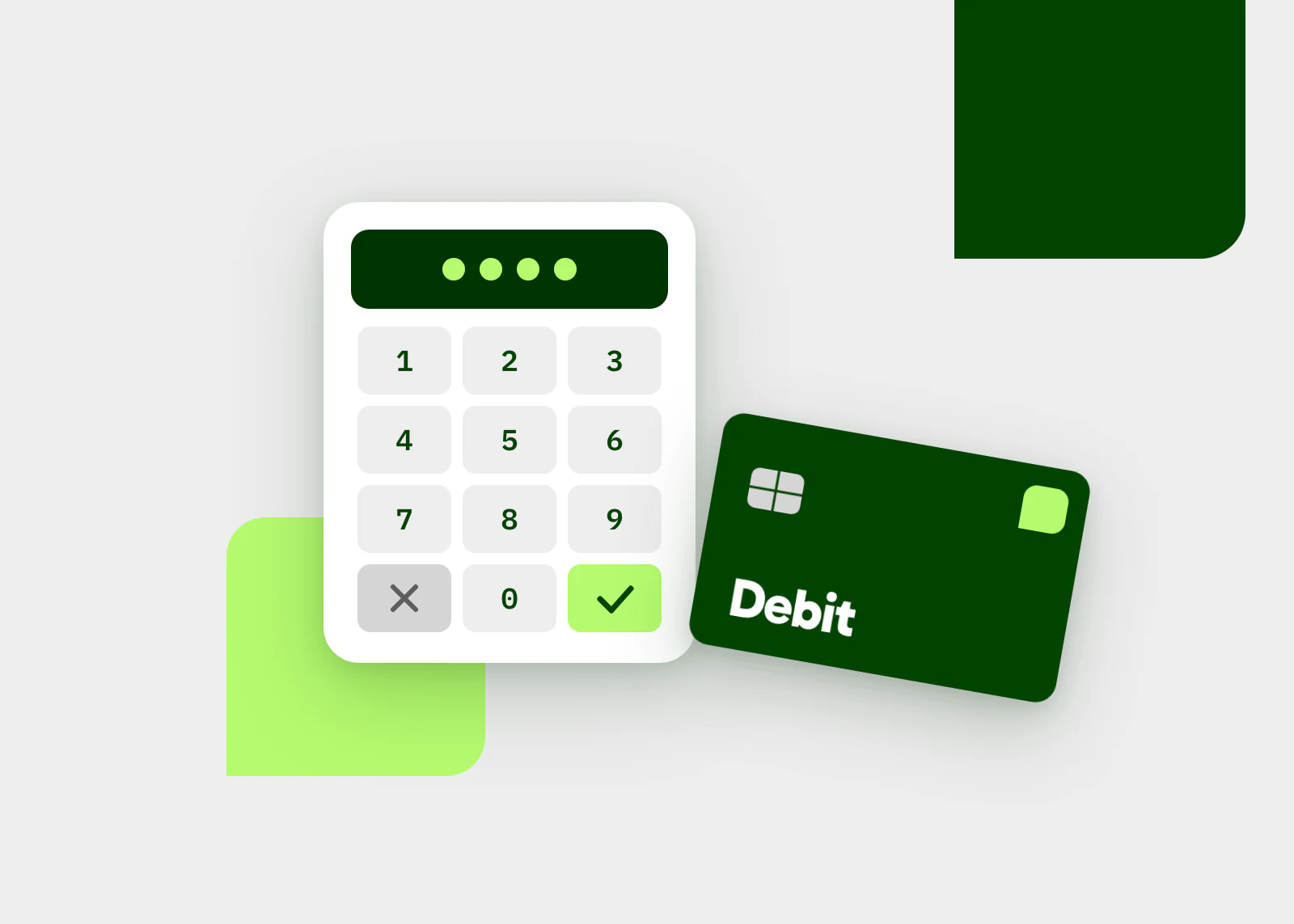
PIN-based debit transactions require the consumer to enter a personal identification number (PIN) at the point of sale. The PIN-based format uses a single message for authorization, clearing and settlement. Unlike signature debit, the customer’s checking account is debited immediately.
Consumer Preferences
Research shows that consumers prefer PIN debit, with 28% of consumers saying they favor PIN-based transactions versus 9% listing signature-based and 7% stating no PIN/no signature as their preference. Cardholders said they prefer PIN-debit because it is more secure, faster and easier to use than signature debit. Those favoring signature debit say it is more convenient than remembering a PIN.
So how should you handle debit cards as a merchant?
If you have not already done so, consider enabling PIN debit acceptance for your business. This may involve contacting your payments processing representative and/or adding a PIN pad to your terminal/POS. Also, if applicable, prompt for a PIN at the POS to encourage your customers to choose debit.
Conclusion
You have a lot to consider when determining your payment acceptance mix, and debit should certainly be a part of your payments planning. Its popularity, convenience and security make strong arguments for merchants to encourage debit payments. If you have further questions regarding debit acceptance and how it can impact your business, feel free to reach out to your payments processing representative.
Sources
* Hitachi Consulting and BAI, Study of Consumer Payment Preferences, September 2010
** LexisNexis “2011 True Cost of Fraud Study”